
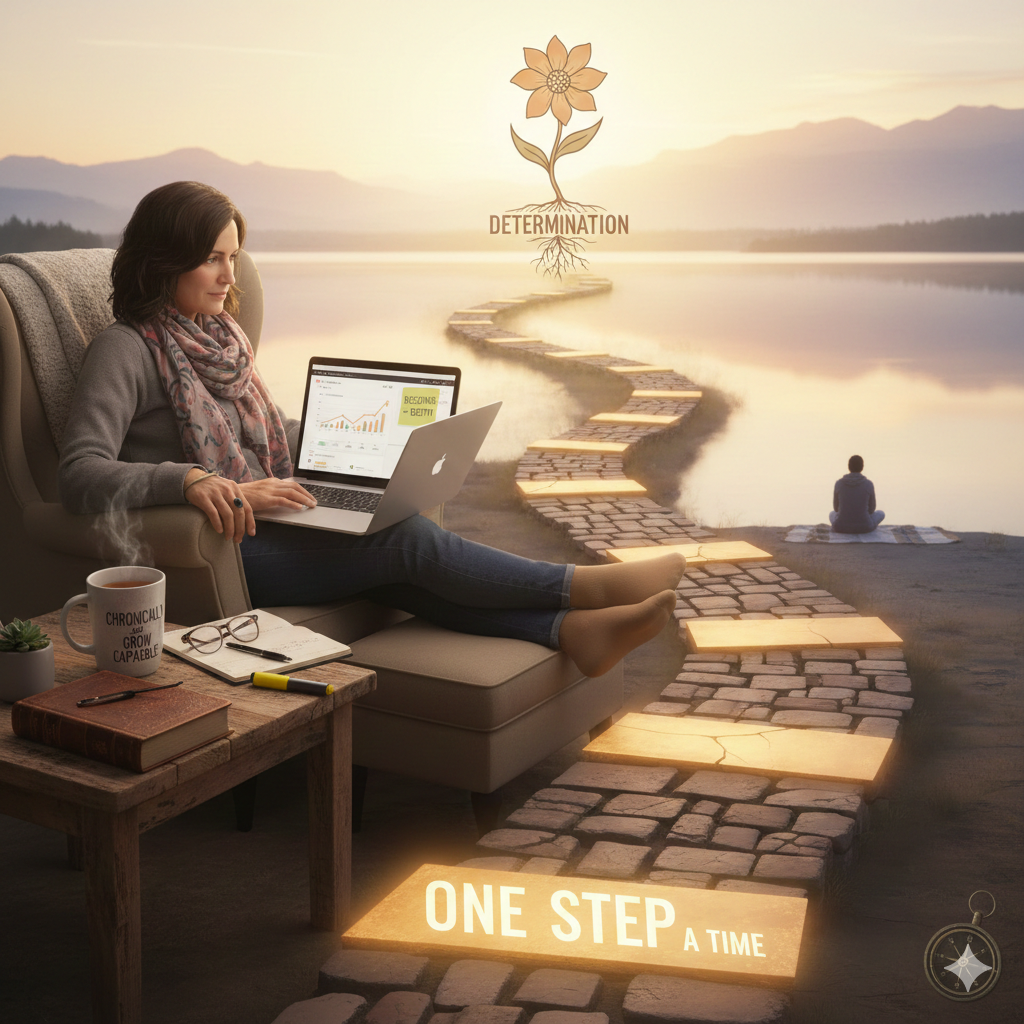
My Decisions, My Destiny: Think and Grow Rich Chapter 8 Through a Disabled Entrepreneur’s Lens

Napoleon Hill’s *Think and Grow Rich* is a timeless classic, a roadmap for success that has inspired millions. Each chapter offers profound insights, but Chapter 8, “Decision,” holds a particularly unique weight for me as a disabled network marketer living with chronic conditions. For many, Hill’s emphasis on swift, unwavering decisions is a powerful call to action. For me, it’s a call to *strategic adaptation* – a dance between conviction and the fluctuating realities of my health.
If you’re also navigating entrepreneurship with chronic illness or a disability, you know that every decision often comes with an additional layer of consideration. It’s not just about the business outcome; it’s about the energy expenditure, the potential for a flare, and the relentless mental battle against doubt. Yet, Hill’s principles aren’t just for the able-bodied or those with boundless energy; they are universal truths that can be molded to fit any journey. Let’s dive into how I interpret and apply Chapter 8.

The Weight of Decision in a Body That Doesn’t Always Cooperate
Hill famously states that successful people “make decisions quickly and change them slowly.” This sounds fantastic in theory, but what happens when brain fog makes quick thinking a monumental task, or when persistent fatigue blurs your focus? For me, the cost of a “wrong” decision isn’t just financial or reputational; it’s often measured in precious spoons of energy, days lost to recovery, or increased pain.

This reality forced me to develop a new approach to decisiveness. It’s not about being reckless or impulsive, but about creating systems that allow me to make *informed, swift* decisions when my energy allows, and to trust those decisions even when my body rebels. This often means pre-planning, delegating research where possible, and relying on a well-defined “why” that guides every choice. My “why” – financial independence, the flexibility to manage my health, and creating a legacy – acts as a compass when the path ahead seems obscured by symptoms.
Swift, But Strategic: My Version of Decisiveness

Hill points out that successful individuals often act decisively, while those who fail tend to procrastinate. How do I, with conditions that sometimes dictate a slower pace, embrace swift decision-making?
- 1. Trust Your Gut (and Your ‘Why’): Living with chronic illness often hones a unique intuition. We become intimately familiar with our limits and our needs. If a decision feels “off” or like it will cost too much, I listen. Similarly, if it deeply aligns with my core values and my long-term vision (my ‘why’), I move forward with conviction.
- 2. Small, Consistent Decisions: Not every decision needs to be earth-shattering. Hill also praises persistence. I focus on making small, consistent decisions daily – reaching out to one new prospect, creating one piece of content, learning one new skill. These micro-decisions build momentum and reduce the overwhelming pressure of one huge, make-or-break choice.
Building a Wall Against Doubt: Your Inner Circle (and Your Own Head)
Hill talks about how indecisive people are easily influenced by the opinions of others. This is a battle I know well. When you live with an invisible illness, you often face skepticism – from well-meaning friends and family who question if you’re “really up to this,” to internal doubts whispered by fatigue and pain.
My strategy?

- Define Your Circle: I’ve consciously chosen to surround myself with a small group of trusted mentors, fellow disabled entrepreneurs, and supportive loved ones who truly understand my journey. Their encouragement and honest feedback are invaluable.
- The Power of Your Own Conviction: This is where Hill’s message resonates most deeply. My decision to pursue network marketing wasn’t made lightly. It was born out of a profound need for flexibility and residual income that traditional employment couldn’t offer. That unwavering conviction is my shield against external doubt and internal criticism. When a flare hits, I remind myself *why* I’m doing this and that this business is a key part of my path to a more sustainable future.
- Practice Self-Compassion: Sometimes, the most important decision is to rest. That’s not a failure; it’s a strategic move to preserve my health and ensure I can continue pursuing my goals tomorrow. Deciding to be kind to myself is just as critical as deciding on a new business strategy.
The “Pivot” vs. the “Quit”: Deciding When to Adapt
“Change them slowly,” Hill advises regarding decisions. For someone with chronic conditions, “slowly” might mean “when absolutely necessary due to an unforeseen health setback.” I’ve learned the difference between *quitting* a goal and *pivoting* my strategy to achieve it.
If a particular marketing approach drains me too much, I don’t quit the business; I decide to try a different method. If a specific time-block for work consistently causes a crash, I decide to restructure my day. These aren’t signs of indecisiveness; they are strategic adaptations based on real-time data from my own body. The *decision to succeed* remains steadfast, but the *decisions on the path to get there* are flexible and responsive to my unique needs.
Deciding for Your Future Self
Ultimately, my decisions as a disabled network marketer are deeply rooted in deciding for my future self. Every choice I make today is aimed at creating a life where my health is supported, where I have financial freedom, and where I can contribute meaningfully without sacrificing my well-being.
- I decided to start this business despite my conditions.
- I decide every day to show up, even when it’s hard.
- I decide to learn, adapt, and grow, embracing the unique perspective my journey offers.
These are not easy decisions, but they are powerful ones. They are the decisions that are shaping my destiny, one strategic, self-compassionate, and determined step at a time.

—
What decisions are you making today that are shaping your destiny? Have you found unique ways to apply *Think and Grow Rich* to your own circumstances? I’d love to hear your thoughts and experiences in the comments below!

A Note From Ben:
My goal is to help you build a life of health and freedom. This blog is supported by two resources I personally use and trust to achieve that mission:
- My ASEA Business: Supporting my family’s wellness from the inside out.
- “Success in 10 Steps”: The framework I use for building a successful business from home.
You can learn more about ASEA here and “Success in 10 Steps” ebook here.
Discover more from Coach Freedom and Friends
Subscribe to get the latest posts sent to your email.
