
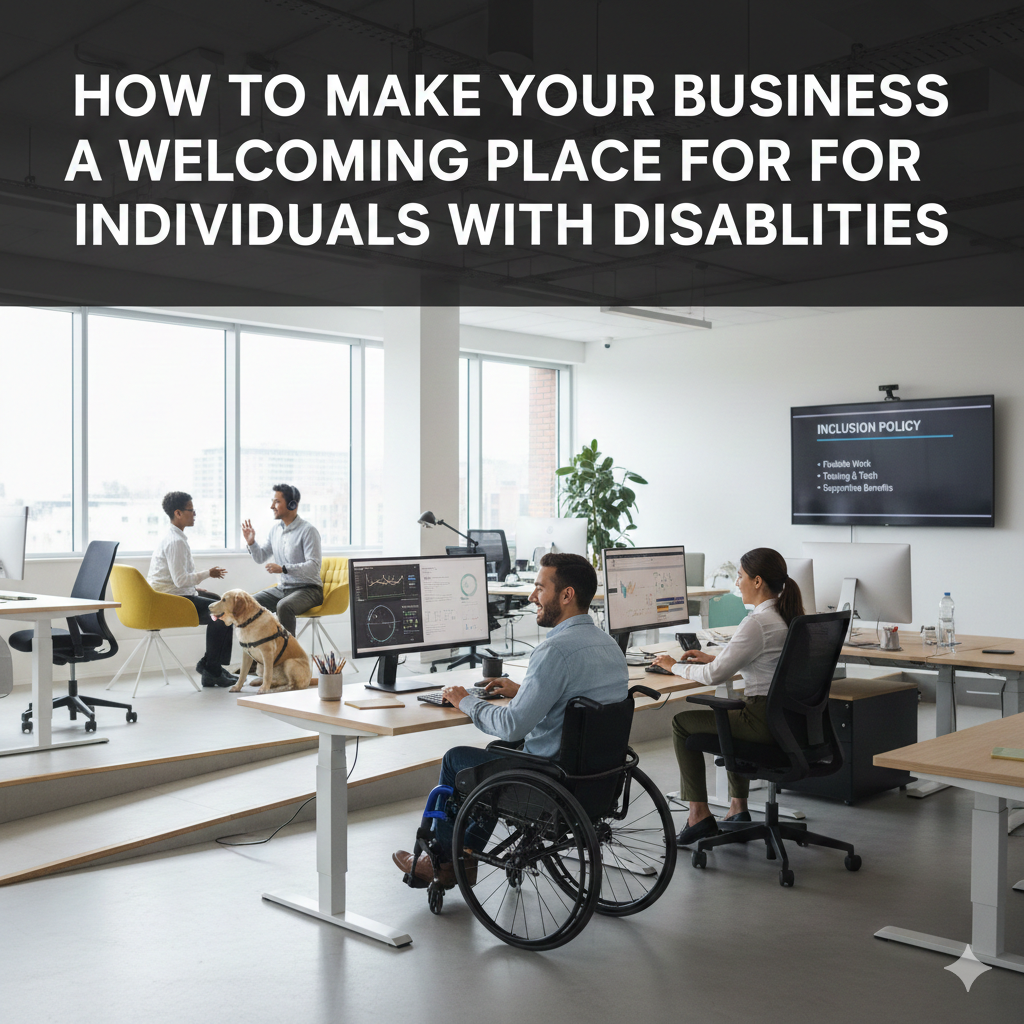
How To Make Your Business a Welcoming Place For Individuals With Disabilities

Employers across industries are rethinking how they attract and retain talent, and one
group often overlooked is people with disabilities. This isn’t about charity or
compliance—it’s about access to skilled, motivated employees who bring resilience,
adaptability, and fresh problem-solving perspectives to the workplace. Companies that
design inclusive structures and benefits don’t just widen their hiring pool; they strengthen
their organizations from the inside out.
A Quick Overview for Busy Employers

Hiring people with disabilities works best when incentives, policies, and workplace design
reinforce one another. Thoughtful accommodations, flexible benefits, and growth
opportunities signal that your organization values ability, not limitation. When these
elements are visible and genuine, candidates are more likely to apply—and stay.
Why Traditional Hiring Structures Fall Short
Many hiring systems unintentionally exclude candidates with disabilities. Rigid schedules,
inaccessible application processes, and limited benefits can deter qualified applicants
before an interview even happens. Employers who remove these barriers often discover
that inclusion improves morale, retention, and productivity across the board.

Core Structures That Support Inclusive Hiring
Inclusive workplaces are built deliberately. These structures don’t require radical
overhauls; they require intention.
Common structural supports include:
● Flexible work arrangements (remote, hybrid, or adjusted hours)
● Accessible recruiting tools and interview formats
● Clear accommodation request processes
● Manager training focused on disability awareness
● Written policies that normalize inclusion rather than treating it as an exception
These foundations make incentives believable rather than performative.
Incentives That Actually Matter to Candidates
Attracting candidates with disabilities isn’t about flashy perks. It’s about practical support
that aligns with real needs.
Education and Skill Growth as a Long-Term Incentive

Offering continuing education funding can be especially attractive. When employers
support learning pathways—such as online university programs—employees can advance
their skills without sacrificing health, income, or family responsibilities. For example,
online degree programs allow working adults to pursue advanced education while
maintaining flexibility.
Employees interested in technology roles may explore programs that build skills in IT,
programming, and computer science fundamentals, all while remaining employed full-time.
Employers interested in this type of benefit can review options for further reading here.
How to Put an Inclusive Hiring System in Place
Think of this as a practical checklist rather than a philosophy exercise.
Employer Action Checklist
- Audit job descriptions for unnecessary physical or scheduling requirements
- Ensure application and interview processes are accessible
- Formalize accommodation request procedures
- Train managers on inclusive leadership and communication
- Review benefits through the lens of flexibility and access
- Communicate these supports clearly in job postings
Each step reduces friction and builds trust before day one.
Comparing Common Incentives and Their Impact
| Incentive Type | What It Offers | Why It Appeals |
| Flexible schedules | Control over work hours | Supports health and energy management |
| Remote or hybrid work | Location independence | Reduces transportation and accessibility barriers |
| Assistive technology | Tools tailored to needs | Improves productivity and confidence |
| Education funding | Career advancement | Signals long-term employer commitment |
| Wellness benefits | Holistic support | Addresses physical and mental health needs |
This mix allows candidates to choose what fits their lives rather than forcing a one-size-
fits-all model.
Frequently Asked Questions
Do accommodations lower productivity?
No. In most cases, accommodations either have neutral cost or improve efficiency by
enabling employees to work at their best.
Are inclusive benefits expensive?
Many accommodations are low-cost, and the return shows up in retention, engagement,
and reduced turnover.
Should employers disclose these benefits publicly?
Yes. Clear communication in job listings helps candidates self-select and builds credibility.
A Helpful Resource
For employers seeking practical guidance, the Job Accommodation Network (JAN) offers
free, evidence-based resources on workplace accommodations, disability employment, and
inclusive policy design. Their tools are widely used by HR teams and managers.
The Result: A Stronger, More Resilient Workforce
When employers design structures, benefits, and incentives that genuinely support people
with disabilities, they gain access to a broader talent pool and foster loyalty that’s hard to
buy with salary alone. Inclusion isn’t a side initiative—it’s a workforce strategy. The
companies that recognize this early are often the ones best prepared for the future.
Thank You to Lance Cody Walker for another brilliant article
A Note From Ben:
My goal is to help you build a life of health and freedom. This blog is supported by two resources I personally use and trust to achieve that mission:
- My ASEA Business: Supporting my family’s wellness from the inside out.
- “Success in 10 Steps”: The framework I use for building a successful business from home.
You can learn more about ASEA here and “Success in 10 Steps” ebook here.
Discover more from Coach Freedom and Friends
Subscribe to get the latest posts sent to your email.
